
SGS report 7873315 | SGS Institut Fresenius
Show this page to customers who ask about vessel safety. Every model comes from the same copper batch and is covered by one test report.
- Water taste and smell stay the same. After ten days in the vessel, testers found no difference.
- No lead detected. Cadmium, nickel and mercury were not found in the water either.
- Only trace copper. Far less copper passes into the water than European rules allow.
Results at a glance
Water taste and smell unchanged
Water stayed in the vessel for 10 days. The laboratory found no foreign smell or aftertaste.
odour 0, taste 0
No heavy metals detected
Lead, cadmium, nickel and mercury were below the method detection limit.
lead, cadmium, nickel, mercury: not detected
Only trace copper
In the strictest test, 0.06 mg/kg of copper passed into the water. The limit is 4 mg/kg.
0.06 vs a limit of 4
Pass
The vessels met the German LFGB act and Regulation (EC) No 1935/2004 in the scope tested.
SGS report 7873315
Full results: what passed into the water
All 22 metals tested in water migration, in mg per kg of water. A less-than sign means the result was below the method detection limit — not detected.
| Metal | Result | Limit |
|---|---|---|
| Lead (Pb) | < 0,01 | 0,01 |
| Cadmium (Cd) | < 0,002 | 0,005 |
| Mercury (Hg) | < 0,003 | 0,003 |
| Nickel (Ni) | < 0,01 | 0,14 |
| Arsenic (As) | < 0,002 | 0,002 |
| Copper (Cu) | 0,06 | 4 |
| Zinc (Zn) | 1,2 | 5 |
| Chromium (Cr) | < 0,01 | 1 |
| Cobalt (Co) | < 0,01 | 0,02 |
| Aluminium (Al) | < 0,1 | 5 |
| Iron (Fe) | < 1 | 40 |
| Manganese (Mn) | < 0,1 | 0,55 |
| Molybdenum (Mo) | < 0,01 | 0,12 |
| Tin (Sn) | < 1 | 100 |
| Silver (Ag) | < 0,005 | 0,08 |
| Barium (Ba) | < 0,01 | 1,2 |
| Beryllium (Be) | < 0,01 | 0,01 |
| Lithium (Li) | < 0,01 | 0,048 |
| Antimony (Sb) | < 0,01 | 0,04 |
| Vanadium (V) | < 0,01 | 0,01 |
| Thallium (Tl) | < 0,0001 | 0,001 |
| Zirconium (Zr) | < 0,1 | 2 |
Values are from the third water contact, which has the strictest legal limits. Taste and smell scored 0 on a 0–4 scale, with an allowed threshold of 2.75.
Frequently asked questions
Are copper vessels safe?
The laboratory checked what happens to water stored in these vessels. Taste and smell did not change, lead, cadmium, nickel and mercury were not detected, and copper passed into the water at far below European limits.
Is there lead in these vessels?
No lead was detected in the water from these vessels. The same applies to cadmium, nickel and mercury: results were below the method detection limit.
How is 99.9% copper purity different from a food-contact test?
Purity describes what the vessel is made of. A food-contact test checks what migrates from the vessel into water. We have both documents, and both cover the same copper batch.
Which models were tested?
The laboratory received one sample made of a cup, a bottle and a jug from the same copper batch. The report lists models: 6241, 6243, 6253, 5762, 6223, 6214, 6215, 6221, 6222, 6210, 6211, 5758, 6227, 6225, 6226, 6236, 6233, 6231, 6232, 6238, 6239.
What are LFGB and Regulation 1935/2004?
They are German and EU rules for food-contact articles. They set how much of a substance may pass from a vessel into food or drink. Our vessels met those requirements in the scope tested.
Test details and document access
The test was done by SGS Institut Fresenius in Taunusstein, Germany. Report no. 7873315, order 7671663, date 23.02.2026. Client: NDX Group, Zakręt.
The laboratory checked water taste and smell (DIN 10955, 10 days at 40°C) and metals migrating into water (ICP-MS and ICP-OES per CoE CM/RES(2013)9). The vessels met the LFGB act and Regulation (EC) No 1935/2004 in the scope tested.
Results apply to the tested samples and the test date. This is a laboratory test report, not an SGS-issued certificate.
Copper composition is confirmed by a separate 2026 report, with raw-material purity of about 99.993%. That is a different document from the food-contact test.
The laboratory requires written consent before the report scan is used in marketing, so we transcribed all figures above. We give trade partners a copy of the full report and the declaration of compliance. Contact us and we will send the PDF.
Vessels covered by the test
The laboratory received a sample made of a cup, a bottle and a jug from the same copper batch.
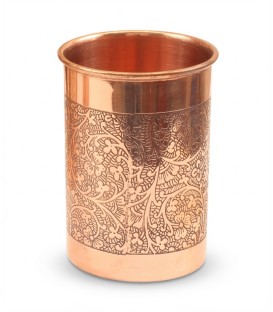 COPPER EMBOSSED GLASS 250ml [SE 283]
zł30.75
View
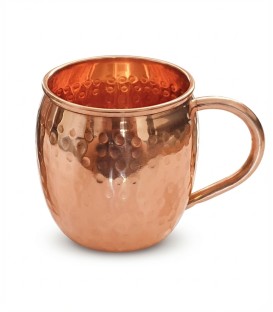 COPPER HAMMERED MUG “C” HANDLE 500ml [SE 312]
zł61.50
Buy
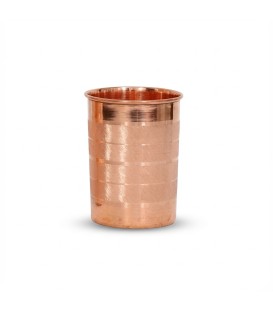 SILVER TOUCH GLASS COPPER [SE 302]
zł36.90
View
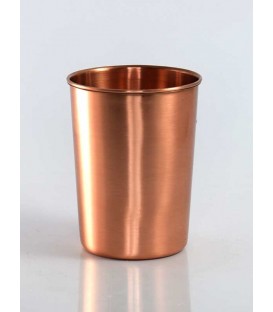 COPPER TUMBLER PLAIN 300ml
zł30.75
View
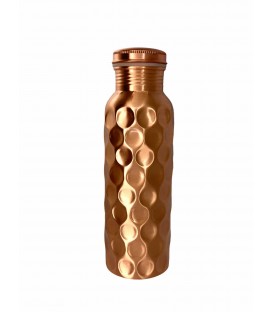 COPPER BOTTLE- DIAMOND BOTTLE HAM 650ml [SE 220]
zł104.55
View
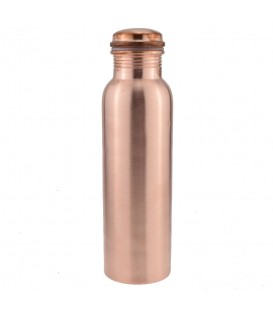 COPPER BOTTLE- MATT FINISH JOINT FREE BOTTLE 650ml [SE 212]
zł104.55
View
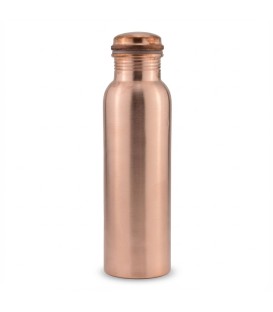 COPPER BOTTLE- MATT FINISH JOINT FREE BOTTLE 950ml [SE 212]
zł92.25
View
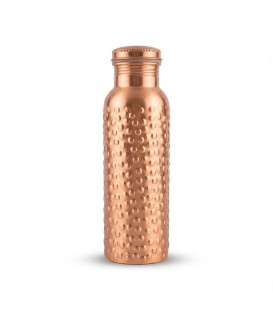 COPPER BOTTLE- PEARL BOTTLE HAM 650ml [SE 219]
zł104.55
View
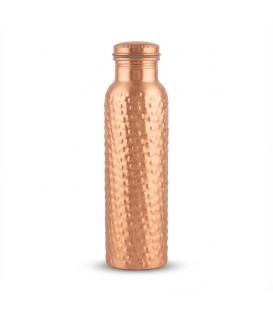 COPPER BOTTLE- PEARL BOTTLE HAM 950ml [SE 219]
zł110.70
View
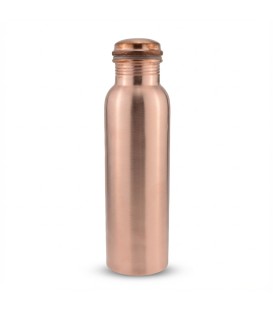 COPPER BOTTLE- PLAIN BOTTLE JOINT FREE 650ml [SE 210]
zł79.95
View
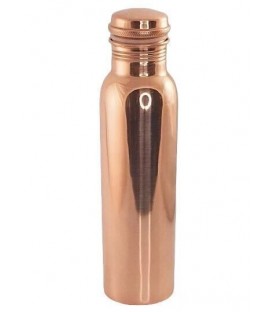 COPPER BOTTLE- PLAIN BOTTLE JOINT FREE 950ml [SE 210]
zł92.25
View
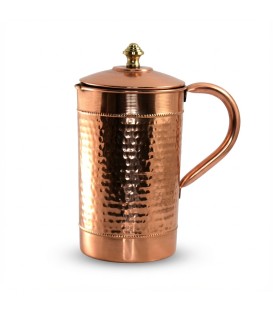 COPPER JUG HAMMERED 2ltr
zł196.80
View
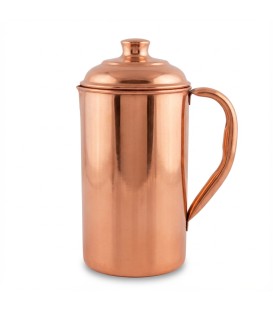 COPPER PLAIN JUG (COPPER KNOB) 2litr [SE 250]
zł178.35
View
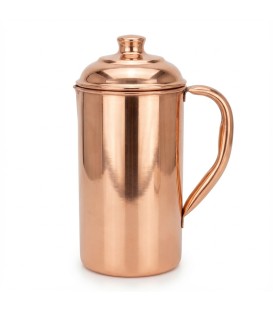 COPPER PLAIN JUG (COPPER KNOB) 1litr [SE 250]
zł120.54
View
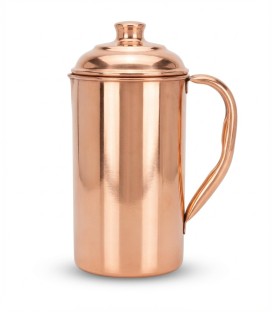 COPPER PLAIN JUG (COPPER KNOB) 1.5litr [SE 250]
zł147.60
View
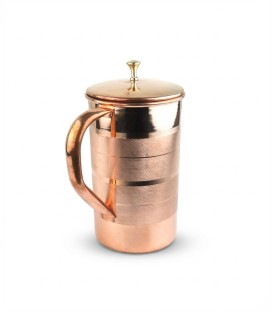 COPPER LUXURY JUG (BRASS KNOB) 2litr [SE 253]
zł178.35
View
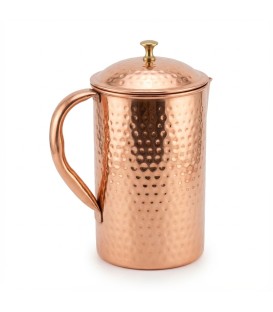 COPPER HAMMERED JUG (BRASS KNOB) 2litr [SE 252]
zł178.35
View
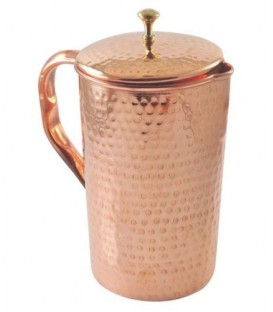 COPPER HAMMERED JUG (BRASS KNOB) 1litr [SE 252]
zł120.54
View
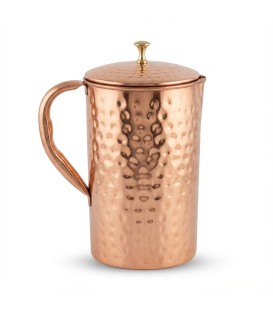 COPPER HAMMERED JUG (BRASS KNOB) 1.5litr [SE 252]
zł147.60
Buy
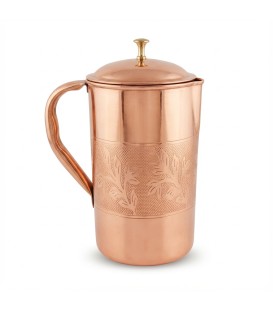 COPPER EMBOSSED JUG (BRASS KNOB) 1.5litr [SE 254]
zł147.60
View
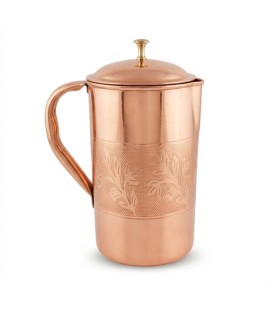 COPPER EMBOSSED JUG (BRASS KNOB) 2litr [SE 254]
zł178.35
View